Animation
Outreach programs are designed for students in grades 5-12. The cost of one 45-60 minute program is $125, but multiple programs on the same day are offered at a discounted rate – $110 each for two programs and $90 for three or more. Requests for program information or scheduling should be directed to Mary Rapien at mrapien(at)rimosa(dot)org or at 401-525-1931.
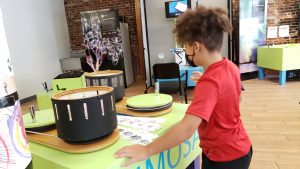
Our Animation offerings have expanded to four distinct 45-60 minute programs. You may choose any one of them to offer indvidually as a stand-alone program, or you may elect to schedule more than one to create more extensive experiences. They may be offered in any order.
Each of these programs addresses Grade Span Expectations VAD 1-1; VAD 1-2; VAD 2-1; T1-1; LS 4
Class size: 4 to 25
Animation 1: The Art and Science of Visual Perception
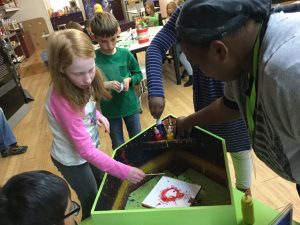
During this program, students learn about “persistence of vision” – the name often given to the way the human brain blends sudden changes into smooth motion. It is this interpretation by our brains that make movies possible. Students will make a mini- animation (a thaumatrope) to take home, and work in small groups to make their own stop-motion film to be premiered at the end of the outreach and to be viewed later on the RIMOSA website. Additional post-program activities can include students working individually to write a dialogue, narration, or “director’s comments” for their short film.
Animation 2: Cut-Out
During this program, students learn about different types of animation – focusing on 2 dimensional or “cut-out” animation. After screening some professional “cut-out” shorts, students will make their own jointed 2-d puppets which may be taken home. They will then work in small groups to make their own stop-motion film, using their newly created puppets, to be premiered at the end of the outreach and to be viewed later on the RIMOSA website. Additional post-program activities can include students working individually to write a dialogue, narration, or “director’s comments” for their short film.
Animation 3: Pixilation
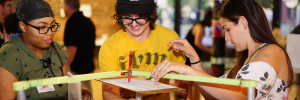
Students learn about different types of animation in this program, but focus on the technique called “Pixilation”, which uses live people as puppets for stop-motion animation. Facilitators will discuss the importance of storyboards to filming, and after screening some professional “pixilation” shorts, facilitators will demonstrate how they might have looked as storyboards. Students will be given “plot starters” (locations or characters) and brainstorm stories which incorporate them. They will work in small groups to create storyboards. Then, following their storyboards, they will make their own stop-motion pixilation film, to be premiered at the end of the outreach and to be viewed later on the RIMOSA website. Additional post-program activities can include students working individually to write a dialogue, narration, or “director’s comments” for their short film, or create a storyboard for a longer project.
Animation 4: Color, Emotion and Illusion
During this program, students learn about how to create successful illusions in stop-motion animation. Facilitators will lead discussion, illustrated by specific professional stop-motion animation shorts, on how lighting and color are used to invoke specific moods, and how the type of movement given to animated objects can aid the illusion of their weight and texture. Students will work in small groups to complete short exercises on using color to create mood and motion to further illusion. Then they will use these techniques, along with materials provided, to make their own stop-motion film, to be premiered at the end of the outreach and to be viewed later on the RIMOSA website. Additional post-program activities can include students working individually to write a dialogue, narration, or “director’s comments” for their short film. They may also analyze commercials or other short videos to determine how color and motion is used to manipulate viewers’ emotions.